Meijer & Co
Your recruitment partner in Hungary. We run the application, the first interviews, the driving test, and we stay in touch throughout the eighteen months. If you have a question and you do not know who to ask, ask us.

This page shows you exactly what happens from the day you apply until month eighteen in the Netherlands. We, Schenk, and Vacancee each have our job to do. You have yours. Nothing here is a surprise.
Three parties work together on your move. Here is who does what, before we go into the detail.
Your recruitment partner in Hungary. We run the application, the first interviews, the driving test, and we stay in touch throughout the eighteen months. If you have a question and you do not know who to ask, ask us.
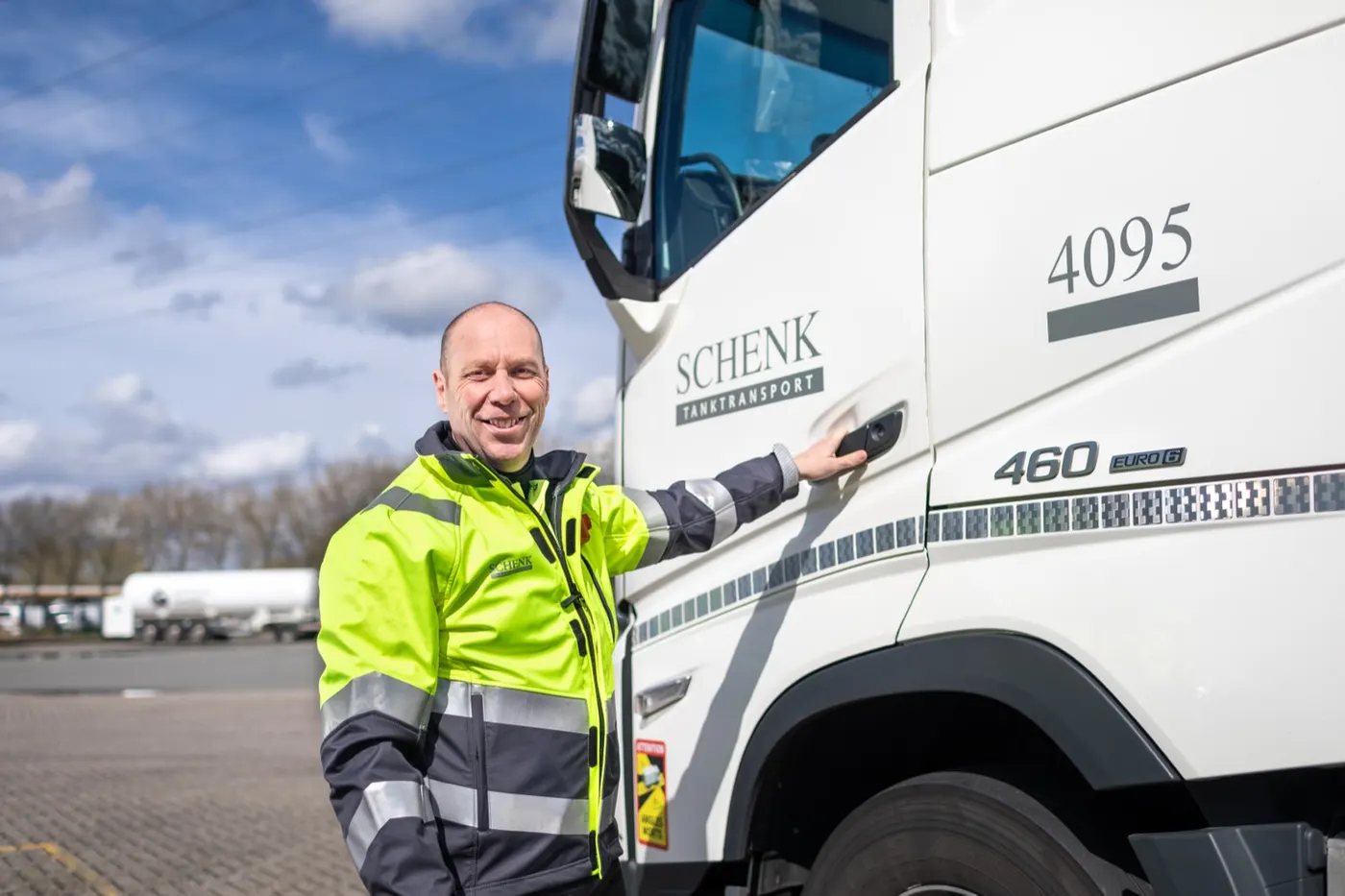
A 100-year-old tanker transport company close to Rotterdam. They decide on the hire, they pay your salary, they run the shifts, they train you.
Schenk's integration partner. They arrange your housing, your health insurance, your BSN, your BRP registration, your job coach, and your language classes.
Interested to be our next driver?
Apply now
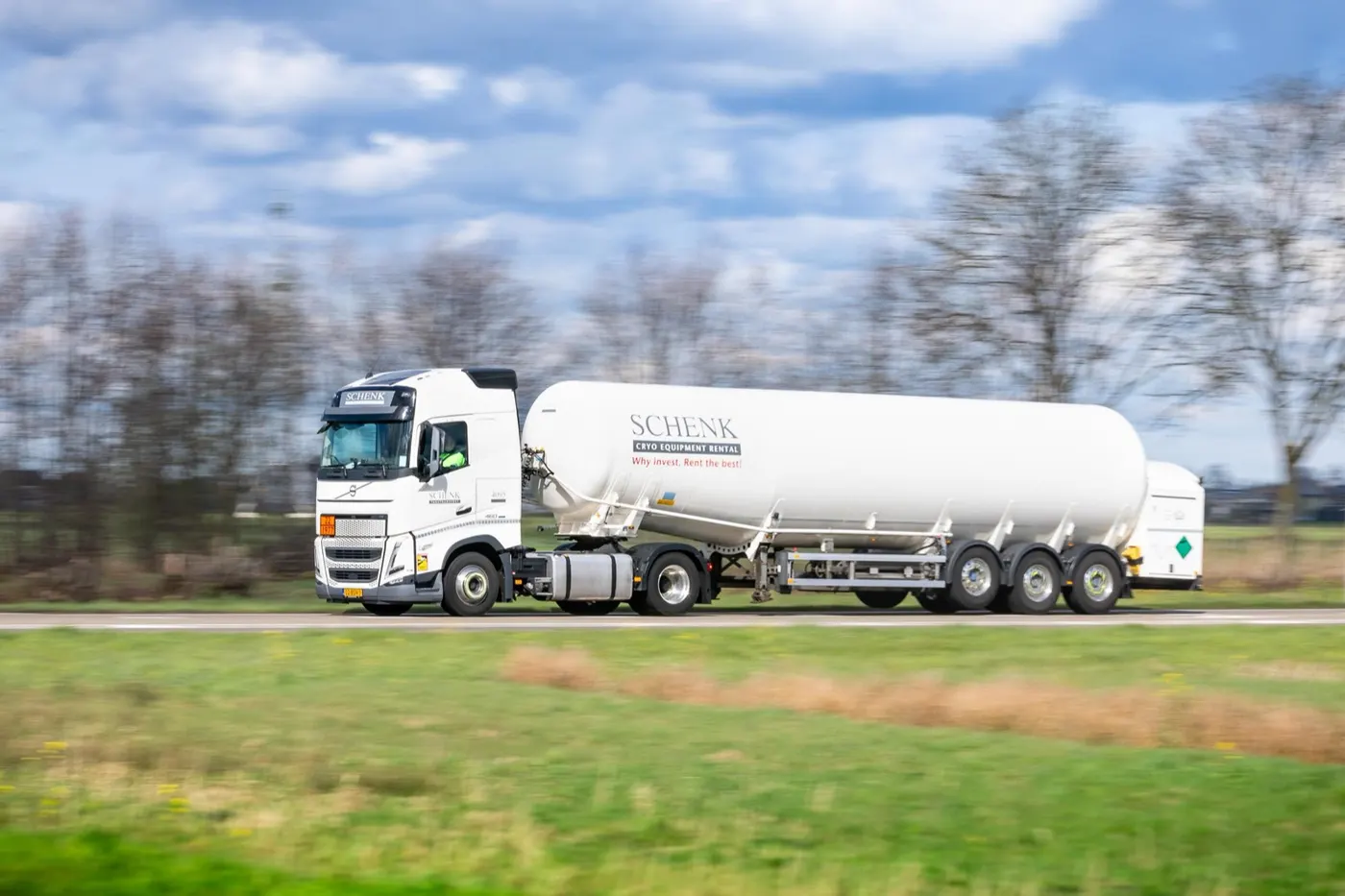
A hundred-year-old tanker transport company close to Rotterdam. ADR specialists in fuels, industrial gases and chemicals. Part of daily Dutch infrastructure.


Six phases, from your first call to the choices you make at month eighteen. Every step, who owns it, and what you do.
This is where we get to know each other. You call us or apply through the form. We call back within twelve hours. If the basics fit, we move fast.
You call the number on the advertisement, or you fill in the short form. We see it straight away. You do not need a polished CV. Your name, your number, your licence type and your years behind the wheel are enough to start.
A Meijer & Co recruiter calls you to walk through the role, answer your first questions, and check whether the basics fit. Not a sales pitch. If it does not fit, we will tell you on this call.
A longer conversation on WhatsApp video, Teams or Viber, whichever works for you. We go through your experience, your motivation, and what life in the Netherlands actually looks like day to day. We explain the full eighteen-month picture so you know what you are signing up for.
A recruiter from Schenk's HR team calls you. They want to understand you as a person, not just as a driver. Expect questions about why you want to move, how you handle stress, how you work with customers.
A second interview with Schenk HR plus a team leader from operations. Shift patterns, product types, your approach to procedures. The team leader is someone you may actually work with. If they are not comfortable with you, you do not get hired. If you are not comfortable with them, the same applies.
Before Schenk makes a formal offer, you do a short practical driving test in Hungary with a local driving school we partner with. This is a baseline safety check, not an examination. If you already hold an ADR certificate you still do the test.
If the driving test is fine, Schenk puts together a formal offer: scale, base salary, start date, depot. We walk through it with you on a call. If you accept, you upload your documents (passport or ID, driving licence, ADR certificate, Code 95) into AFAS, Schenk's internal HR system. Once your documents are in, Vacancee starts preparing your arrival.
You will not be the first Hungarian in the Netherlands, and you will not be the last. Roughly thirty thousand Hungarians live in the country today, spread across the Randstad, Eindhoven, and the tanker belt south of Rotterdam where Schenk's depots are.
Where Hungarians tend to live. Most Hungarian communities are concentrated in South Holland and North Brabant. Dordrecht, Rotterdam, Breda and Tilburg all have active groups. Within thirty minutes of Papendrecht you will find several hundred Hungarian families.
Staying connected. Facebook remains the main community platform. Search “Magyarok Hollandában” to find the largest groups. There are Hungarian-language church services in Rotterdam and The Hague, and Hungarian food shops in the bigger cities.
Why this matters. You do not need the community to survive, but it helps. When you miss home food, when you need advice, when your family visits, having Hungarian-speaking contacts within driving distance makes the first year much easier.
Links: Magyarok Hollandában (Facebook) · hollandia.mfa.gov.hu (Hungarian embassy in The Hague)
You have accepted the offer. Now things move from talking to arranging. Vacancee takes over most of the practical work. Your job is to stay reachable and get your documents in order.
Your Dutch employment contract is drafted and sent to you for signature. Vacancee explains the terms on a call, with Meijer & Co on the line if you prefer. Once you sign, the rest of the preparation kicks off automatically.
Dutch health insurance is mandatory. Vacancee arranges it for you through HollandZorg. The premium is €166.80 per month, deducted automatically from your salary.
Your BSN (Burger Service Nummer) is your Dutch social security number. You need it for your salary, your bank, your taxes, everything. Vacancee books your BSN appointment at the municipality so it is ready during your first week.
Vacancee arranges a private studio for you, within twenty to thirty minutes of the depot. Fully furnished by default (you can also bring your own furniture, but most drivers do not). Internet, heating, the basics. Ready on your arrival day. If you bring your family, Vacancee arranges a larger apartment instead — subject to availability and a slightly higher contribution.
You organise your own journey to the Netherlands, by car or by plane. Vacancee sends you detailed route instructions to your accommodation a day or two before you leave. If you travel by plane, Vacancee meets you near the accommodation.
Dutch labour law is significantly more employee-protective than Hungarian labour law. That is worth understanding before you sign.
Fixed-term, then permanent. Your first contract is for 12 months. After that, it can be extended a maximum of two times. From the third extension on, Dutch law requires the contract to become permanent (indefinite).
A permanent contract in the Netherlands is genuinely permanent. The employer cannot end it without a serious, documented reason, and the labour courts apply that test strictly. This is very different from Hungary, where “permanent” carries less weight in practice.
Notice period. One month on either side, after the probation period.
Annual leave. Twenty-seven days of paid leave per year. Twenty-three statutory days plus four ATV days.
Pension. You build up pension from day one through the Dutch transport sector pension fund. On top of that, after roughly two years living and working in the Netherlands, you also qualify for the Dutch state pension (AOW), paid by the government when you retire. Both come automatically. You do not have to apply.
Links: business.gov.nl (Dutch government overview of employment rights)
Anyone living and working in the Netherlands is legally required to have Dutch health insurance. You will be insured through HollandZorg, arranged by Vacancee.
What it costs. Your monthly premium is €166.80, deducted directly from your salary. You will see this on your payslip every month. There is no separate bill to pay.
What it covers. Basic health insurance covers GP visits, hospital care, emergency care, and medically necessary specialist care. Some treatments are only partially covered, depending on the policy conditions.
The GP comes first. You see a general practitioner (GP) first, just like in Hungary. The GP refers you to a specialist only if needed. For a true emergency, call 112.
Links: hollandzorg.com · zorgwijzer.nl (Dutch GP system explained)
You land in the Netherlands. At least one day between your arrival and your first day of work. The first working day for new English-speaking colleagues is always the second of the month. Orientation is always in Papendrecht.
You arrive at your accommodation. Vacancee meets you at the agreed time, helps you check in, gives you the keys, and walks you through the house rules and the basics (internet, heating, common areas).
Vacancee shows you the neighbourhood: supermarket, public transport, useful local places. If you did not bring your own car, you can rent one through Vacancee for around €70 per month, or use a bike. This sounds small. It is not. Starting work with your fridge stocked and knowing where the nearest shop is makes the first week much easier.
Your first working day is always in Papendrecht. You meet HR, sign the final papers, receive your work gear, and get an overview of the company, the safety rules, and the non-negotiables (zero tolerance on alcohol and drugs, no smoking in the truck, follow ADR procedures exactly).
Training classroom time. Procedures, systems, the onboard computer, the route planning tools. You will use all of this every day, so this day matters.
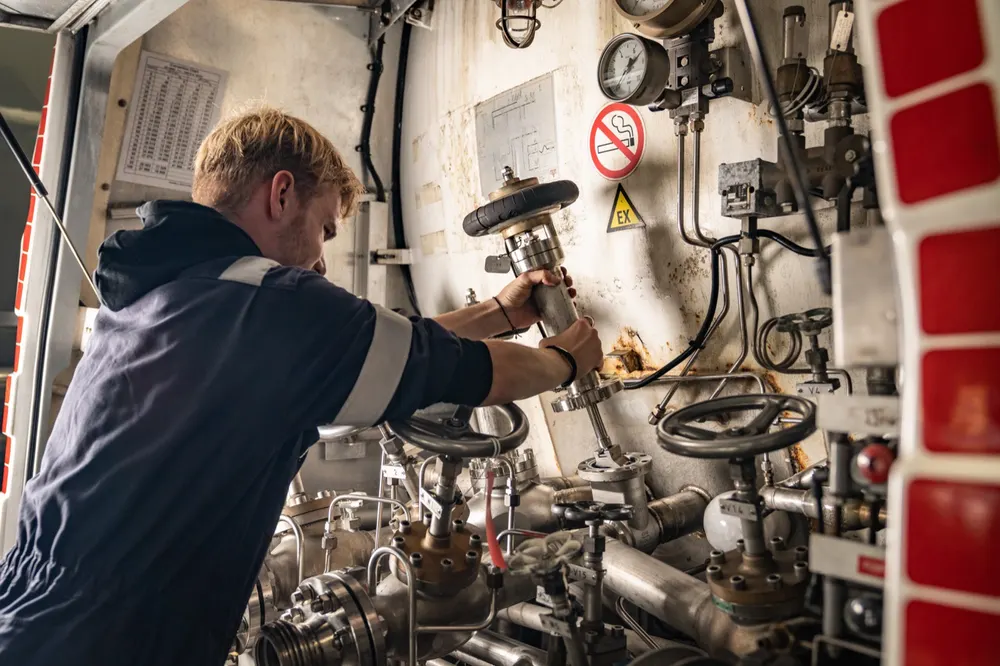
You are assigned a certified mentor driver who trains you on the road. You ride with them, observe, then gradually start driving yourself under their supervision. Three weeks for fuels. Six weeks for industrial and cryogenic gases.
Your Vacancee job coach starts a structured six-week programme. Three areas: understanding your motivation and strengths, identifying goals, turning those into practical next steps. Not therapy. Someone outside work helping you settle properly.
You register your address at the local municipality. This gives you your BSN officially and puts you in the Dutch population register. Vacancee comes with you or briefs you fully.
Your mentor and team lead check in with you: what is going well, what needs work, what to focus on next week. You can raise issues here too.
Your accommodation is a private studio, not a shared dormitory. Vacancee arranges it before you arrive, within twenty to thirty minutes of the depot.
What you get. A furnished studio, private kitchen and bathroom, internet, heating, and access to communal areas where applicable. Close to supermarkets and public transport. Free parking at or near the accommodation.
What you pay. Your contribution is capped at €750 per month, deducted from your salary. Schenk covers the rest for the first 18 months. The €750 covers rent, utilities (electricity, heating, water) and internet.
House rules that actually matter. Treat the place with care. Report damage or technical issues to Vacancee immediately. Respect common areas and neighbours. Quiet hours apply.
If something breaks. Message Vacancee on WhatsApp. Urgent issues (no heating, water, electricity) same day. Non-urgent within a few working days.
Contact: Vacancee WhatsApp: +31 010 307 2305
Two bits of Dutch administration you cannot avoid. Vacancee handles the paperwork, but it helps to understand what they are.
BSN (Burger Service Nummer). Your Dutch social security number. You need it for your salary, your bank account, your taxes, your doctor, and almost every Dutch office. Think of it as the Dutch equivalent of your Hungarian adóazonosító jel, but used more broadly.
BRP (Basisregistratie Personen). The Dutch population register. When you register at the municipality, you are added to the BRP at your Dutch address. Your BSN is issued through this registration. Must be done within five working days of arriving.
What Vacancee does. Books the appointment, tells you what to bring, accompanies or briefs you. Also ensures your rental agreement and contract are in the right format.
Links: ind.nl/en/bsn · rijksoverheid.nl
Schenk does not rush this. A properly trained driver who takes a week longer is preferable to a fast-tracked one who does not fully understand what they are handling. ADR fuels and gases are not forgiving.
The structure. Three weeks minimum for fuel distribution. Six weeks minimum for industrial and cryogenic gases. Daily on-road training with your mentor, weekly evaluations together.
Sign-off. At the end of the training period, an independent team lead driver (not your mentor) assesses you. You do not drive solo until this sign-off is given.
If you need longer. Nobody gets penalised for taking longer to get it right. The schedule flexes. What Schenk does not accept is someone who takes a shortcut or pretends to understand something they do not.
What your ADR certificate is for. ADR is the European agreement on road transport of dangerous goods. Your certificate allows you to transport fuels, gases and chemicals legally. If you do not have one yet, we help you get one. The cost is around €200, paid by you.
You are driving, first with a mentor, then on your own. This is the most important phase of the eighteen months. The decisions made here determine everything that follows.
Daily driving with your mentor. Weekly check-ins. You get paid all your hours from the day you start driving solo runs (usually week 3 for fuels). First few weeks you are paid for a standard 40-hour week while you learn.
The team lead driver signs you off to drive solo. Own routes, own shifts, own responsibility. Real pay kicks in: overtime above 40h at 130%, shift supplement 11.25%, Saturdays 150%, Sundays 200%.
Your first Dutch payslip lands. Looks different from a Hungarian one. Full explainer below. You register your hours daily in Nmbrs, not optional.
Dutch and English language classes in an online group on Microsoft Teams. Thursday evenings. Your coach sends the invite. Attendance matters. The drivers who show up are the ones who still work for Schenk in year three.
Your first Dutch payslip may look confusing. Here is what you are looking at, top to bottom.
Top: personal details. Your name, your employer (Schenk), your contract hours, your base salary, whether payroll tax credit is applied. Check this section every month. If something is wrong here, it affects everything else.
Middle: gross salary. Shows how gross is built up: regular salary, worked hours, overtime, allowances (shift supplement 11.25%, night shift premium €17 gross per shift, Saturday and Sunday premiums). The total is your gross salary before tax and deductions.
Deductions. Payroll tax, social contributions, pension, health insurance (€166.80), housing costs (up to €750). All automatic. You do not pay any of these separately.
Net salary. What is left is what hits your bank account. On average, around €4,400 net per month once on full salary with a typical 50-hour week. Training months lower. High-shift months higher.
Registering hours. Every day, end of shift, same day. Late hours create late pay.
Links: nmbrs.com — Try the salary estimator below
Beyond your base salary, the way you actually earn the average ~€4,400 net is through allowances on top of your base hours. Here is the structure.
What counts as worked time. All time on duty counts, not just driving. Loading and unloading at the customer can take an hour or more per stop, and that is paid time. Waiting at the depot before a shift, paid. The 50 hours a week most drivers do is total time on duty, not 50 hours behind the wheel.
The allowances on top of base. Weekday hours above 40 are paid at 130%. Saturday hours at 150%. Sunday hours at 200%. The shift system (day + night rotation) adds 11.25% on top of your base salary. Each night shift adds €17 gross on top of that.
Try the numbers yourself. The salary estimator below lets you slide your weekly hours, weekend hours, and night shifts to see how the numbers actually move.
You are past the probation period. You know the routes, the customers, the procedures. This phase is about getting comfortable and getting better at the job.
A structured review with your team leader. How you drive, how you handle customers, your procedures, your handling of shift pressure. Honest feedback both ways.
A broader conversation about life outside work. Housing, language, social life, family. If something is not working, we address it before it becomes a reason to leave.
Your job coach stays in regular contact. Check-ins are shorter now that you are settled. You can reach out any time.
You do not need to become Dutch. You do need to understand how Dutch workplaces work, because pretending it is the same as Hungary causes friction that nobody needs.
Directness. Dutch people say what they mean, plainly. If your team leader says your paperwork was sloppy, they mean your paperwork was sloppy. Not angry. Not attacking you personally. Say thank you, fix it, move on.
Punctuality. Being on time is not polite, it is basic. Five minutes late to a shift is a problem. Five minutes late to a customer delivery is a bigger problem. If you are going to be late, call ahead.
Hierarchy is flatter. Your team leader is not above you in the way a Hungarian főnök might be. They expect you to speak up, to disagree when you see something wrong, to suggest improvements. Passive agreement is not respect.
Work and life. When you are off, you are off. Dutch colleagues do not expect you to answer messages late at night or on your day off. You should not expect it of them either.
By now you are a working part of Schenk, not a new hire. The support does not stop, but it changes shape. Your focus shifts toward what comes next.
Administratively, your contract and its management move fully to Schenk. Vacancee steps back from the employment side but stays with you on housing, coaching and integration.
Your coach keeps a light-touch contact going. Call them between sessions any time you need to. They exist for you, not for the schedule.
Language classes, job coach, help with practical matters (government letters, dentist registrations, school questions if your kids join you). All still there. All still included.
You can go home as often as your schedule allows. The practicalities depend on how you travel and what your shift pattern looks like.
How drivers usually travel. Most Hungarian drivers at Schenk have their own car and drive the route themselves. Budapest to Papendrecht is roughly 1,500 km, around 14–16 hours non-stop. Others fly. Wizz Air and Ryanair run cheap routes Budapest–Eindhoven or Amsterdam. Flixbus same route, cheaper, 20 hours.
How often. No rule. Some go home every six weeks, some every three months, some bring family to them. Your 27 days of annual leave plus Dutch public holidays give enough time to visit home meaningfully.
Shift patterns and planning. Your shifts are planned in advance. Coordinate leave with your team leader as early as possible. The earlier you ask, the easier to accommodate.
At the end of the probation period (around week 4), both sides make a decision. This is the single most important moment in your first eighteen months.
Past the probation period · You are part of the team now. Solo routes, own shifts, full salary. The next phases are about growth, not survival.
Based on your training, your first shifts, your attitude, and your fit with the team, Schenk confirms you as a permanent driver or not. If not, they will tell you directly why, and what happens next.
You have had a month in the Netherlands, a month driving for Schenk, a month in your studio. You now know whether this is for you. If it is not, you can say so.
Vacancee supports you with the return journey and a controlled wind-down: notice period, final payslip, housing return, clear close. Not a fight. A professional ending.
Contract continues indefinitely. You move from being the new person to being part of the team. The next phases are about growth and stability.
Eighteen months is not the end of the story. It is the end of the housing subsidy. You have options, and Vacancee helps you through all of them.
That is the actual point of the eighteen months. The housing subsidy is a bridge. You use the bridge to get somewhere.
The subsidy stops, but the studio is yours to keep. You take over the full rent, roughly €1,400/month depending on type. Affordable on a settled driver's pay, but a real choice.
Vacancee helps you search for rental housing that fits your budget and your commute. They know the market, the landlords, the paperwork, the pitfalls. Dutch rental markets are tight. Their help is worth a lot here.
Vacancee connects you with mortgage advisers who work with internationals. 18 months of Dutch payslips, a BSN, and regular savings make you a credible buyer. Many Hungarian drivers buy something small east of Rotterdam.
We ask a lot from the drivers we hire. Here is what we ask, in the order it matters.
Not a short-term assignment. We are counting on you long-term.
Five minutes early is on time. On time is late.
Every shift, no shortcuts. The procedures exist for a reason.
If something is unclear, say so. If something goes wrong, say so. Honest beats convenient, every time.
The drivers who integrate stay longer and enjoy it more. Show up to language class. Talk to your colleagues.
Do not just tolerate them. Use them.
Your studio, your neighbours, common areas. Small things matter.
Either an in-and-out assignment, or the start of a longer life in the Netherlands. Both are valid. Pick one and lean into it.
A high-level view based on CAO 2026 data. Not a salary offer. Your actual payslip depends on your personal tax situation.
~€4,400Avg net per month, with shifts
Two-shift system (day + night) · +11.25%
Yes, either from the start or later on. Schenk supports family reunification over time where the housing allows. Tell Vacancee about your situation early. Not every studio is suitable for a family straight away, but the housing team works with you.
You can leave. One-month notice period. The probation period in particular is a two-way check: if either side decides it is not working, we wind it down cleanly. Vacancee helps you back home if needed.
Not on day one. Intermediate English is enough to start. You join Dutch classes from week four onwards. Over 18 months you pick up enough for daily life.
No. The €750 monthly housing contribution is deducted automatically from your monthly salary, starting from your first payslip. You do not pay anything upfront before arrival, and there is no separate bill to pay.
Yes, and most drivers do. Free parking at or near your housing and your depot. Hungarian plates are fine for the first months. You will eventually need to re-register on Dutch plates if you stay. Vacancee can point you in the right direction.
As often as your shift pattern and 27 days of annual leave allow. Plan holidays early with your team leader. Budapest to Papendrecht is a day's drive or a cheap short flight.
The Schenk housing subsidy ends. You either take over the full rent on your current studio (~€1,400), move to independent rental with Vacancee's help, or buy a home with mortgage guidance from Vacancee's partners. The job continues either way.
The driving test is a basic safety check, not an examination. Very few drivers fail. If you do, we tell you why, and either offer a retake after specific feedback or close the process honestly. No cost to you either way.
If Schenk decides not to continue after the probation period, they explain why. You receive your salary for the month worked, you return the housing, Vacancee supports your return home. A professional close, not a fight.
Valid C+E licence with at least 3 years of driving experience is the baseline. Your Hungarian licence is recognised in the Netherlands. If you do not have ADR, we support you in getting it (~€200, paid by you).
No smoking in the truck, ever. No smoking during loading or unloading. Violations: formal warning first. If repeated, cabin decontamination cost (~€300–350) is charged. In your studio, rules depend on the property. Assume no indoors unless stated otherwise.
Monthly. Schenk pays salary monthly to all drivers, no exceptions. Your payslip lands a few working days before the end of the month.
Schenk. Your employment contract is with Schenk. Meijer & Co recruited you. Vacancee handles your housing, health insurance, and integration. One employer, three partners.
Dutch law prevents vehicle damage being charged to drivers. That said, repeated incidents, especially product crossovers in fuels (a single incident starts at €10,000 damage) are addressed through the performance management process. You will be told clearly.
Possibly, after you are settled. Training for gases is 6 weeks rather than 3. Raise it with your team leader. No guarantees, but a conversation Schenk takes seriously.
Meijer & Co is your single contact throughout the 18 months. If you don't know who to ask, ask us.
Timings on this page are approximate. Housing type and location depend on availability at the time of arrival. Any final offer depends on successful completion of all steps (interview, driving test, medical check). All employment terms are governed by Dutch law and the Dutch transport CAO.
© Meijer & Co Kft. · Budapest, Hungary · In partnership with Schenk Tank Transport